- All
- Product Name
- Product Keyword
- Product Model
- Product Summary
- Product Description
- Multi Field Search

Kaiping Yingchuan Sanitary Ware Technology Co., Ltd
304/316 stainless steel sanitary ware manufacturer
 English

Views: 0 Author: Site Editor Publish Time: 2026-08-12 Origin: Site


Quick answer:
A 316L sink faucet for home use outperforms standard brass and 304 stainless steel faucets in corrosion resistance, hygiene, and longevity—especially in coastal or high-humidity environments. The addition of molybdenum in 316L steel makes it significantly more resistant to chloride corrosion, while its lead-free composition keeps drinking water safe for the whole family.
Replacing a faucet feels like a minor decision. Pick a style, match the finish, call it done. But the material inside that fixture determines how long it lasts, how safe your water is, and how often you'll be back at the hardware store. That's where 316L stainless steel changes the equation entirely.
Most homeowners don't think much about faucet materials until something goes wrong—rust stains on the basin, a leaky valve, or worse, concerns about lead contamination. A 316l sink faucet for home addresses all three problems before they start. The "L" in 316L stands for low carbon, which reduces the risk of carbide precipitation during welding and enhances the steel's structural integrity over time.
This guide breaks down what makes 316L the premium choice for home faucets, how it compares to other materials, and what to look for when you're ready to buy.


The faucet market is crowded with options: chrome-plated zinc alloy, brass, 304 stainless steel, and 316L stainless steel. Each sits at a different price point and performs differently over time.
The key differentiator with 316L is its alloy composition. Standard 304 stainless steel contains chromium and nickel. 316L adds molybdenum—typically 2–3%—which dramatically improves resistance to pitting and crevice corrosion caused by chlorides found in tap water and cleaning products.
Here's a side-by-side comparison of the most common faucet materials:
Material | Corrosion Resistance | Lead-Free | Lifespan | Best For |
|---|---|---|---|---|
Zinc Alloy | Low | No | 3–5 years | Budget applications |
Brass | Moderate | Varies | 10–15 years | Traditional plumbing |
304 Stainless Steel | Good | Yes | 15–20 years | General home use |
316L Stainless Steel | Excellent | Yes | 20+ years | Coastal, high-humidity, kitchen/bath |
The table above makes the trade-offs clear. Zinc alloy faucets corrode quickly and often contain lead. Brass performs better but may leach trace metals into water. 304 stainless is a solid upgrade, but 316L outperforms it wherever chloride exposure or hygiene is a concern.

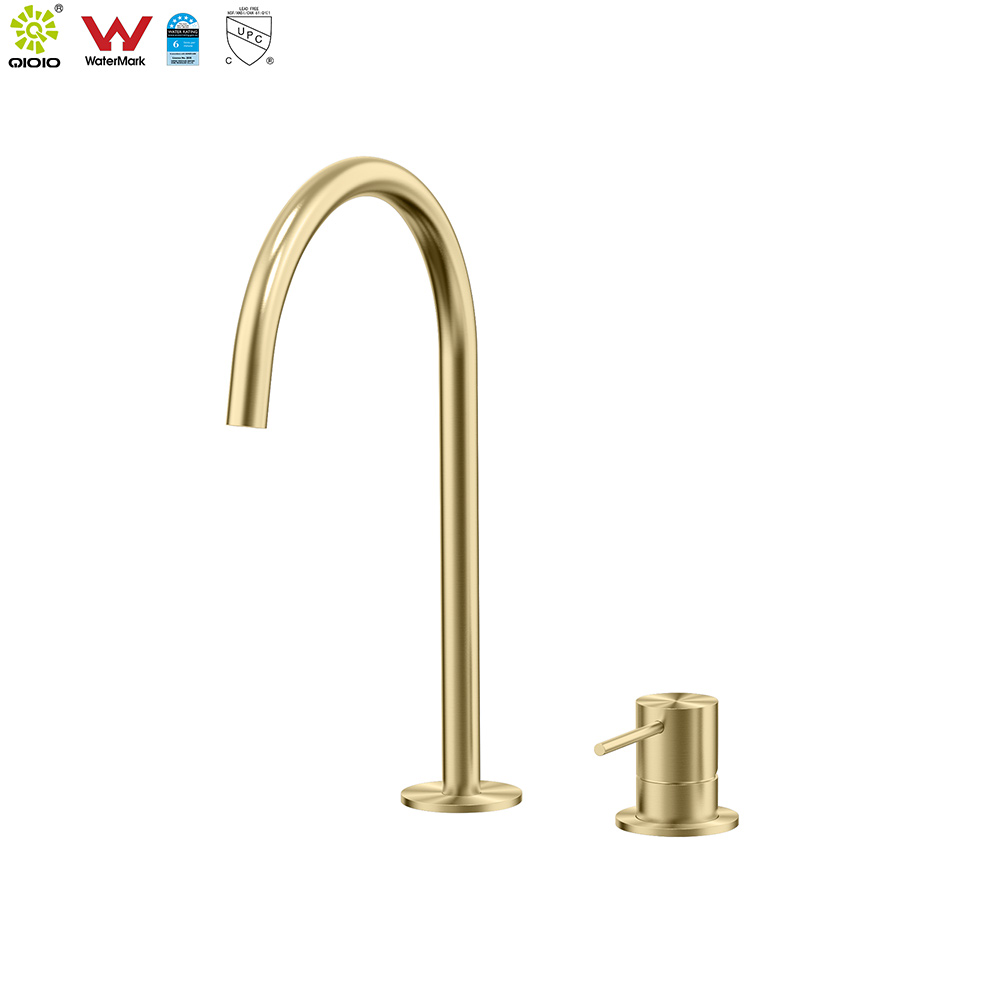
Chlorides are everywhere in a home environment. They're in municipal tap water, in many surface cleaners, and in the salt-laden air of coastal regions. When chlorides penetrate a metal surface, they accelerate pitting corrosion—small, deep holes that compromise the fixture from the inside out.
Molybdenum in 316L stainless steel acts as a chemical barrier. It stabilizes the passive oxide layer on the steel's surface, making it far harder for chlorides to initiate corrosion. The result: a faucet that holds up for decades without discoloration, pitting, or internal degradation.
For kitchen faucets specifically, this matters more than most people realize. Kitchen taps handle everything from raw meat prep to acidic fruit juices to dish soap—all of which can accelerate corrosion in lesser materials. A faucet built from 316L handles these daily chemical exposures without issue.
Even the best faucet body fails if the internal components don't match its quality. The washer is one of the most stress-tested parts of any faucet—it seals the valve seat and controls water flow every time a handle is turned.
A quality 316l faucet washer holds up against the same corrosive conditions as the outer body, ensuring a consistent seal over years of use. When washers degrade, faucets drip. According to the U.S. Environmental Protection Agency, a single dripping faucet can waste more than 3,000 gallons of water per year. A durable washer isn't just a plumbing detail—it's a water conservation measure.
Look for faucets that use ceramic disc cartridges or high-grade stainless washers rated for 500,000 cycles or more. These components eliminate the rubber degradation problems common in older washer-based designs.
Not every faucet marketed as "stainless steel" is made from 316L grade material. Here are the most important criteria to verify before purchasing:
Material certification: Confirm the faucet is specifically 316L, not just "stainless steel." Reputable manufacturers provide material data sheets or mention the grade explicitly in product documentation.
Lead-free certification: Look for certifications such as NSF/ANSI 61, NSF/ANSI 372, or cUPC. These standards verify that water contact surfaces do not leach harmful levels of lead or other contaminants.
Finish durability: Brushed, matte, or PVD-coated finishes on 316L bases resist scratching and fingerprints better than plated zinc alternatives. PVD (Physical Vapor Deposition) coatings on stainless steel are particularly hard-wearing.
Valve quality: Ceramic disc valves offer the longest service life and the smoothest operation. Pair a 316L body with a ceramic disc cartridge and you've built a faucet that should outlast the home renovation cycle by years.
International certifications: For buyers sourcing from manufacturers directly, certifications like Watermark (Australia), WELS, or KC (South Korea) indicate compliance with rigorous international plumbing standards.
Kaiping Yingchuan Sanitary Ware Technology Co., Ltd. is one manufacturer that specializes exclusively in 304 and 316L stainless steel sanitary ware. Founded in 2016 and based in Kaiping, Guangdong—a city recognized as China's "Plumbing Sanitary Ware Base"—Yingchuan holds eight international certifications including Watermark, WELS, cUPC, NSF/ANSI 61, NSF/ANSI 372 Lead Free, and CEC. Their product range spans basin faucets, kitchen faucets, shower sets, and bathroom accessories, all engineered from high-grade stainless steel with lead-free construction.
The short answer: yes, particularly for kitchens and bathrooms where water exposure is constant and hygiene standards matter.
The price premium for 316L over standard brass or zinc alloy narrows considerably when you factor in replacement costs, maintenance, and water waste from dripping fixtures. A high-quality 316L faucet installed once, maintained minimally, and backed by a manufacturer warranty delivers a lower total cost of ownership over a 10–15 year horizon.
For homeowners in coastal areas, hard-water regions, or anywhere with chlorinated municipal water supplies, the upgrade to 316L is less a luxury and more a practical calculation.
What is the difference between 304 and 316L stainless steel faucets?
Both are food-safe and lead-free, but 316L contains molybdenum, which provides superior resistance to chloride corrosion. For most home environments, especially kitchens and coastal locations, 316L outperforms 304 in long-term durability.
Are 316L faucets safe for drinking water contact?
Yes. 316L stainless steel is inherently lead-free and does not leach harmful metals into water. Faucets certified to NSF/ANSI 61 and NSF/ANSI 372 standards have been independently tested to confirm water safety compliance.
How long does a 316L stainless steel faucet typically last?
With proper installation and minimal maintenance, a 316L faucet can last 20 years or more. The material does not rust, pit, or corrode under normal household conditions, and ceramic disc cartridges further extend functional lifespan.
Can I use a 316L faucet outdoors or in a coastal environment?
Yes. The molybdenum content in 316L makes it one of the best faucet materials for salt air and high-humidity outdoor environments. It is commonly used in marine-grade applications for exactly this reason.
What finishes are available on 316L faucets?
Common finishes include brushed stainless, matte black, rose gold, and PVD-coated options. PVD coatings applied over a 316L base offer the best combination of scratch resistance and aesthetic durability.
A faucet is not a glamorous purchase. But choosing the right material eliminates a category of home maintenance problems entirely. 316L stainless steel resists corrosion, contains no lead, handles harsh daily use without degrading, and pairs well with long-life ceramic valve components.
For homeowners making a considered upgrade—whether during a kitchen renovation, a bathroom refresh, or simply replacing an aging fixture—the 316L grade is the version worth buying. Verify certifications, confirm material grade, and choose a manufacturer with documented quality standards. The faucet that goes in this time should be the last one you think about for a long time.


