- All
- Product Name
- Product Keyword
- Product Model
- Product Summary
- Product Description
- Multi Field Search

Kaiping Yingchuan Sanitary Ware Technology Co., Ltd
304/316 stainless steel sanitary ware manufacturer
 English

Views: 0 Author: Site Editor Publish Time: 2026-10-20 Origin: Site


A bathroom renovation lives or dies on the small decisions. Paint colors fade into the background after a few months, but the hardware you touch every single day—taps, handles, spouts—keeps shaping how a space feels and performs for years. Choosing the right bathroom fixture isn't a cosmetic afterthought; it's one of the few decisions in a remodel that affects daily comfort, water efficiency, and long-term maintenance all at once.
Homeowners often spend weeks picking tile and lighting, then grab whatever faucet is on the shelf closest to checkout. That approach tends to backfire. Cheap internals corrode, finishes peel within a year, and what looked like a bargain ends up costing more in repairs and replacements than a quality piece would have in the first place. This post breaks down what actually separates a durable bathroom fixture from a disposable one, what to prioritize depending on your household's needs, and how material choice influences everything from water pressure to resale value.
Not all metal is created equal, and this is where most renovation budgets quietly go wrong. Chrome-plated zinc alloy fixtures look polished in a showroom, but plating wears thin with regular use, exposing the base metal to rust and pitting. Stainless steel, by contrast, resists corrosion at the molecular level rather than relying on a surface coating.
This matters most in humid, high-contact zones. Shower fixtures in particular endure constant exposure to water, soap residue, and temperature swings, which accelerates wear on lower-grade materials. A 304 or 316 stainless steel build holds up to that environment far longer than chrome-plated brass, and it won't leach lead into your water supply over time—a detail that matters more with every passing year of tightening plumbing codes.
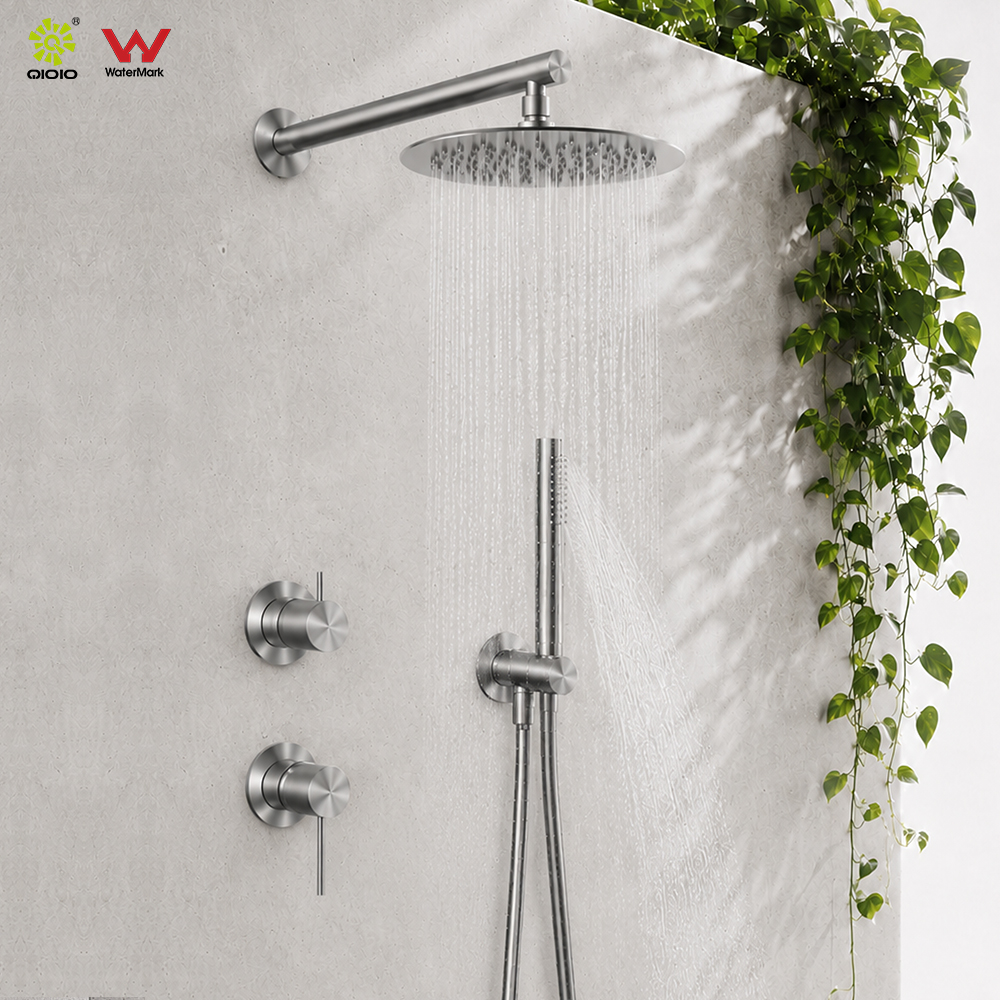
It's worth distinguishing between two categories that often get lumped together: fixtures (the faucets, showerheads, and spouts that control water flow) and the connecting hardware that holds everything in place. Both matter, but they fail differently.
General-purpose bathroom hardware—hinges, mounting brackets, towel bar fittings—typically takes less visible wear but still needs corrosion resistance, especially in coastal climates or homes with hard water. Choose hardware with matching material quality to your main fixtures, or you'll end up with mismatched replacement timelines: a beautiful faucet surrounded by rusting brackets within two years.
Here's a quick comparison of common fixture materials and how they typically perform over time:
Material | Corrosion Resistance | Typical Lifespan | Common Issues |
|---|---|---|---|
Chrome-plated zinc alloy | Low | 2–4 years | Plating wears off, exposes base metal |
Standard brass | Moderate | 5–8 years | Can leach lead without proper certification |
304 stainless steel | High | 10–15 years | Minimal, suited to most residential use |
316 stainless steel | Very high | 15+ years | Rare; ideal for coastal or harsh water conditions |
The takeaway is straightforward: if you're renovating a bathroom you expect to use for a decade or more, material grade should outrank finish color on your priority list. A gorgeous matte black faucet made from low-grade alloy will disappoint you long before a plain stainless steel one made correctly.
Not every household needs the same grade of equipment. If you're on a municipal water system with moderate hardness, a well-made 304 stainless steel piece will serve you well for over a decade. If you live near the coast, deal with hard well water, or run a commercial property like a hotel or gym, 316-grade stainless steel is worth the upgrade—it holds up against salt air and mineral-heavy water that would otherwise shorten a fixture's working life.
This is also where certifications earn their keep. Look for products tested against standards like Watermark, cUPC, or NSF/ANSI 61 for lead-free compliance. These aren't marketing badges; they indicate the product has been independently verified to meet specific safety and performance benchmarks, which matters a great deal when the fixture in question touches your drinking water supply every day.
Even within the stainless steel category, manufacturing process affects outcome. Directional brushing, precision stamping, and mirror electrolysis finishing all contribute to how a piece resists tarnish and handles daily use. Kaiping Yingchuan Sanitary Ware Technology Co., Ltd, known under the QIOIO brand, has built its manufacturing around exactly this kind of precision—producing 304 and 316 stainless steel sanitary ware with Watermark, WELS, cUPC, and NSF/ANSI 372 lead-free certification, among others. The company runs its own factory with in-house research, mold manufacturing, and production, which allows tighter quality control than brands that outsource each stage to different suppliers.
That kind of vertical integration shows up in the finished product. A piece engineered and finished under one roof tends to have more consistent tolerances than one assembled from parts sourced across multiple factories, which translates into fewer leaks, smoother handle operation, and finishes that hold their shine for years rather than months.
A family bathroom used by children and guests needs different durability than a quiet guest half-bath used twice a month. When you're comparing options, think about who uses the space and how often, then weigh material grade against that reality. High-traffic family bathrooms justify spending more on 316-grade components. Lower-use spaces can often perform well with 304-grade options at a lower price point.
It also helps to think beyond the faucet itself. Matching bathroom hardware finishes and material grades across your towel bars, robe hooks, and mounting brackets creates visual consistency and avoids the awkward scenario where one piece ages faster than its neighbors. Buying fixtures and hardware as a coordinated set, rather than piecing them together from different vendors, tends to produce a more cohesive result and simplifies future maintenance since replacement parts are easier to match.
A bathroom renovation is one of the few home projects where upgrading a small, often-overlooked component pays dividends well beyond the installation date. Choosing a well-made bathroom fixture built from corrosion-resistant stainless steel, backed by recognized certifications, and manufactured under consistent quality control isn't an indulgence. It's a decision that protects your water quality, reduces maintenance headaches, and keeps your bathroom looking sharp for well over a decade.
Before your next renovation, take the time to check material grade, certification standing, and manufacturing background rather than relying on finish alone. The fixtures you choose today will be the ones your household touches every single day for years to come, so it's worth getting that decision right the first time.