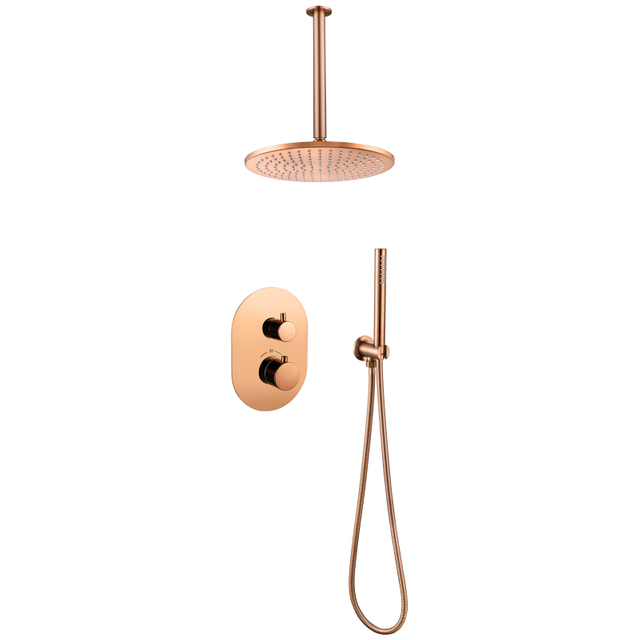
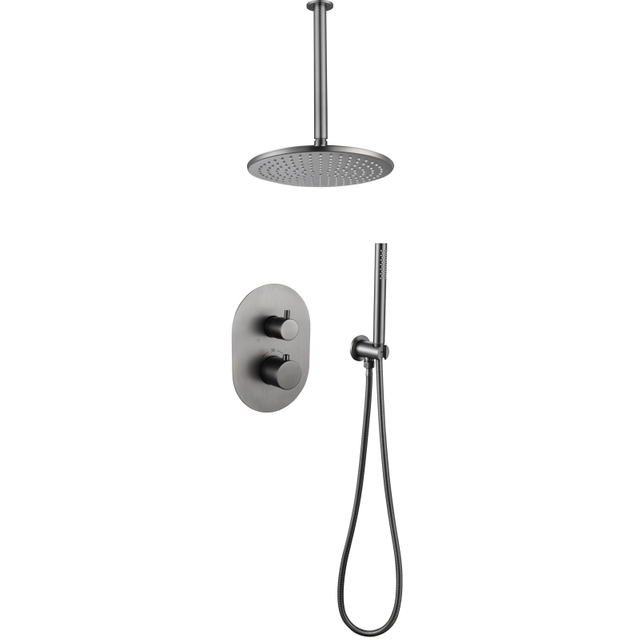
- All
- Product Name
- Product Keyword
- Product Model
- Product Summary
- Product Description
- Multi Field Search

Kaiping Yingchuan Sanitary Ware Technology Co., Ltd
304/316 stainless steel sanitary ware manufacturer
 English

Views: 0 Author: Site Editor Publish Time: 2026-09-08 Origin: Site


Most people don't think much about their shower until something goes wrong—scalding water, freezing surprises, or skyrocketing utility bills. The good news? A single upgrade can solve all three. The thermostat shower has quietly become one of the most practical bathroom improvements available, and the technology behind it is more accessible than ever.
Whether you're renovating a master bath or simply tired of fighting with your faucet every morning, understanding how thermostatic and water-saving shower technology works can help you make a smarter decision—one that pays off in comfort, safety, and savings for years to come.
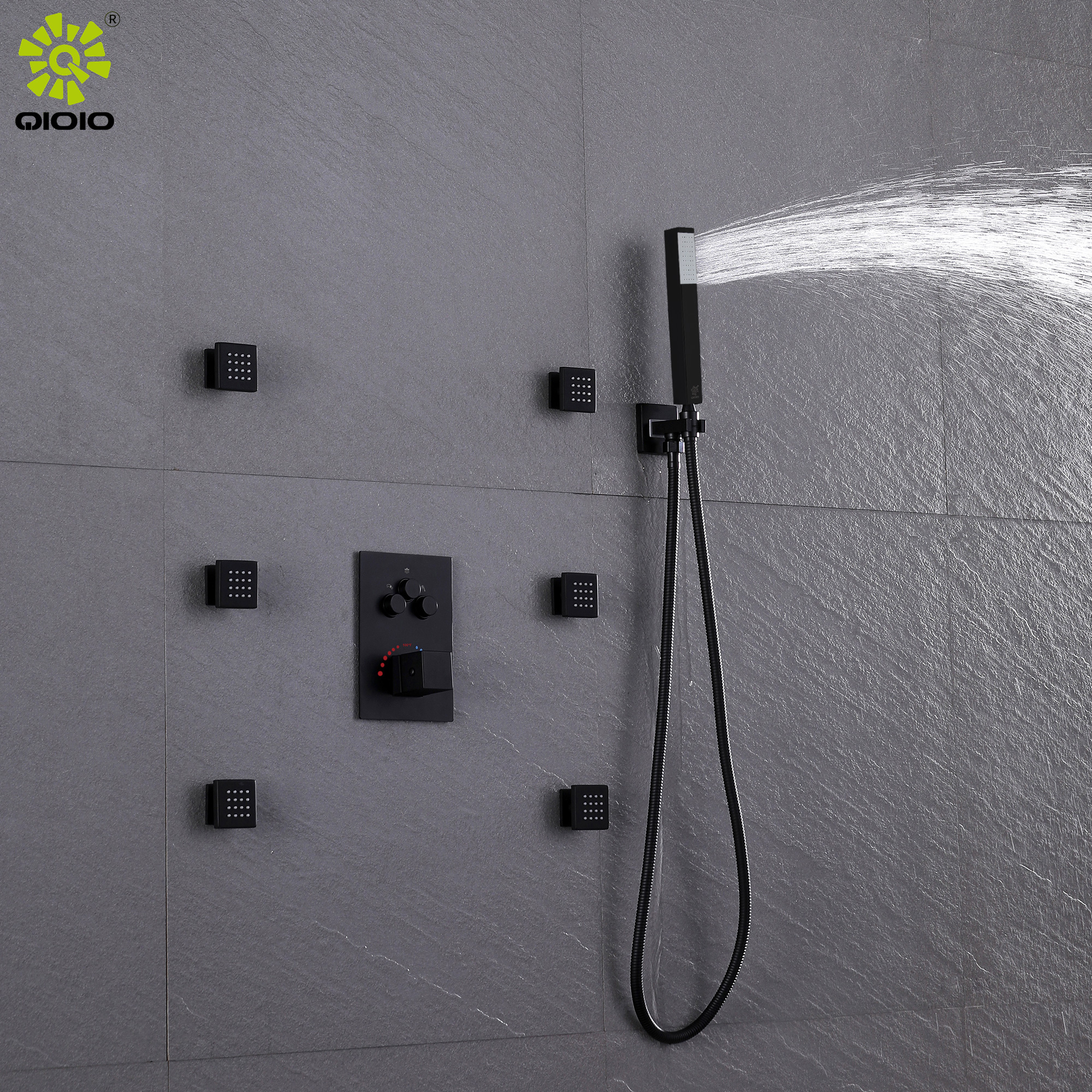
A thermostatic shower system uses a built-in valve to maintain a preset water temperature, regardless of what else is happening in your home. Someone flushes a toilet? The pressure drops—but your shower temperature stays steady. It's a genuinely elegant piece of engineering.
Traditional mixing valves blend hot and cold water manually, which means temperature fluctuates every time demand changes elsewhere in the plumbing system. Thermostatic valves, by contrast, react automatically to those pressure changes and rebalance the mix in real time. The result is a consistent, comfortable shower from start to finish.
Most systems also include an anti-scald protection feature, which caps the maximum temperature—typically at 38°C (100°F). This makes thermostatic showers particularly valuable for households with young children or elderly family members.
Component | Function |
|---|---|
Thermostatic valve | Maintains preset water temperature automatically |
Diverter valve | Directs water between multiple outlets (e.g., overhead, handheld) |
Shower head | Delivers water at the desired flow pattern |
Volume control | Adjusts water flow independently of temperature |
Anti-scald device | Limits maximum temperature for safety |
The shower head plays a larger role in your overall experience than most people realize. A temperature control shower head pairs directly with thermostatic valve systems to deliver water at the exact preset level—no guessing, no adjustment needed each time you step in.
Beyond temperature, modern shower heads are also designed with flow efficiency in mind. Many feature aerating or laminar flow technology, which mixes air into the water stream to maintain pressure while reducing actual water volume. The practical effect is a shower that feels powerful and satisfying, even when using less water overall.
For homeowners who spend a lot of time in the shower—or who simply want more control over their bathroom environment—pairing a quality shower head with a thermostatic system is the most direct path to a consistently great experience.
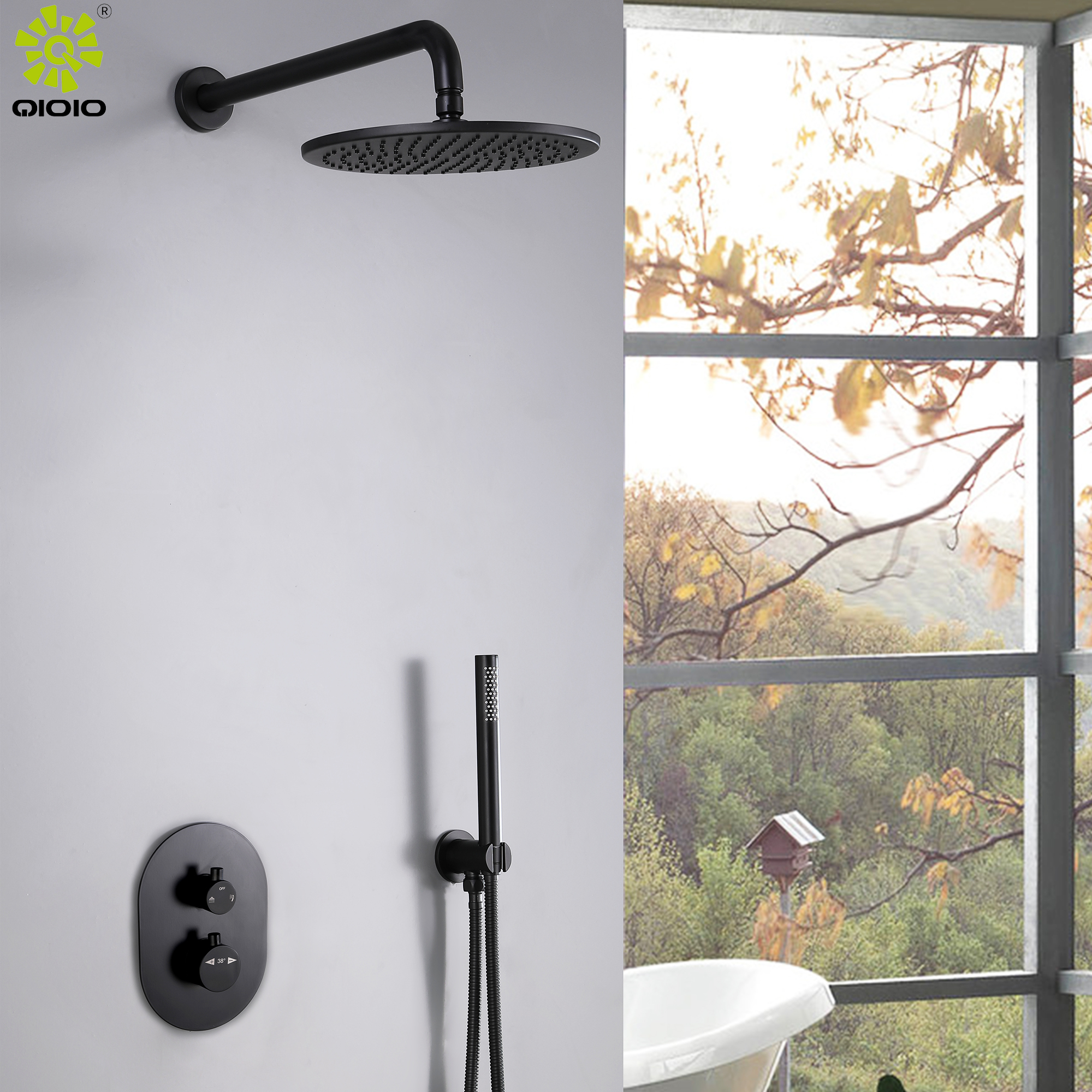
Here's a number worth knowing: a standard shower head in the United States uses about 2.5 gallons of water per minute. Over the course of a year, a family of four can use well over 100,000 gallons just on showers alone. That's a significant environmental and financial footprint.
A low flow shower head addresses this directly. These fixtures are engineered to deliver a satisfying shower experience at flow rates between 1.5 and 2.0 gallons per minute—cutting water use by up to 40% compared to standard models. Many U.S. states and municipalities now require low-flow fixtures in new construction, and WaterSense-certified products meet EPA standards for both efficiency and performance.
The savings add up quickly. Switching to a low-flow shower head can reduce a household's annual water heating costs by $70 or more, according to the U.S. Department of Energy. Over five to ten years, that's a meaningful return on a relatively modest investment.
Not all thermostatic shower systems are built to the same standard. Here's a practical breakdown of what matters most when making your selection:
Material quality: Stainless steel—particularly 304 or 316 grade—offers superior corrosion resistance and longevity compared to brass or zinc alloy alternatives. It also resists limescale buildup, which is a common issue in hard-water areas.
Certifications: Look for products carrying recognized certifications such as Watermark (Australia), cUPC (North America), WELS, or NSF/ANSI standards. These certifications confirm the product has been independently tested for safety, performance, and lead content.
Adjustability: The best systems allow independent control of temperature and volume, so you can lock in your preferred temperature and simply turn the flow on or off without resetting anything.
Finish durability: PVD (Physical Vapor Deposition) finishes hold up significantly better than standard chrome plating, resisting scratches and tarnishing even with daily use.
Kaiping Yingchuan Sanitary Ware Technology Co., Ltd—better known as Ycfaucet—has been manufacturing stainless steel bathroom fittings since 2016, operating out of Shuikou town in Kaiping, Guangdong Province, widely regarded as China's plumbing and sanitary ware manufacturing hub.
Ycfaucet specializes in 304 and 316 stainless steel fittings, a material choice that sets it apart from manufacturers who rely on cheaper alloys. The company holds eight international certifications, including Watermark, WELS, KC, cUPC, and NSF/ANSI 61 and NSF/ANSI 372 Lead Free—credentials that carry real weight in markets like North America and Australia where compliance standards are strict.
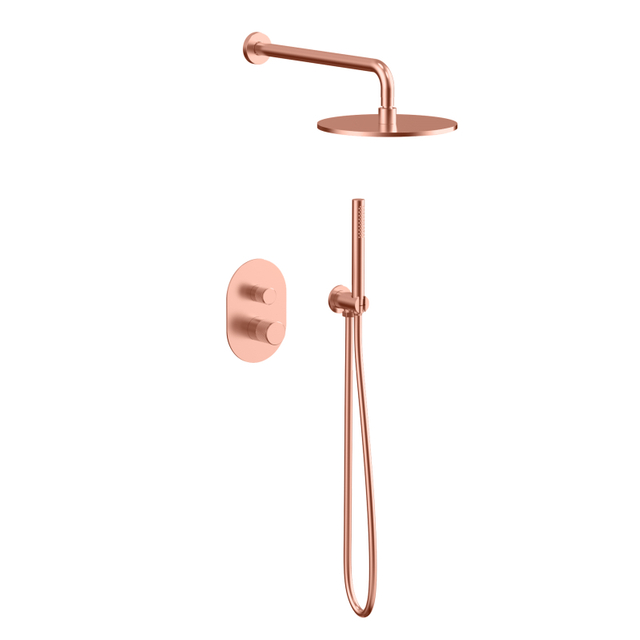
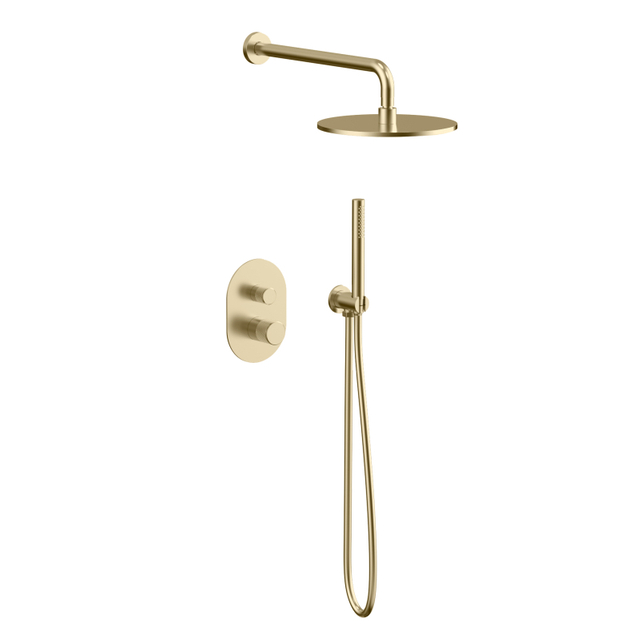
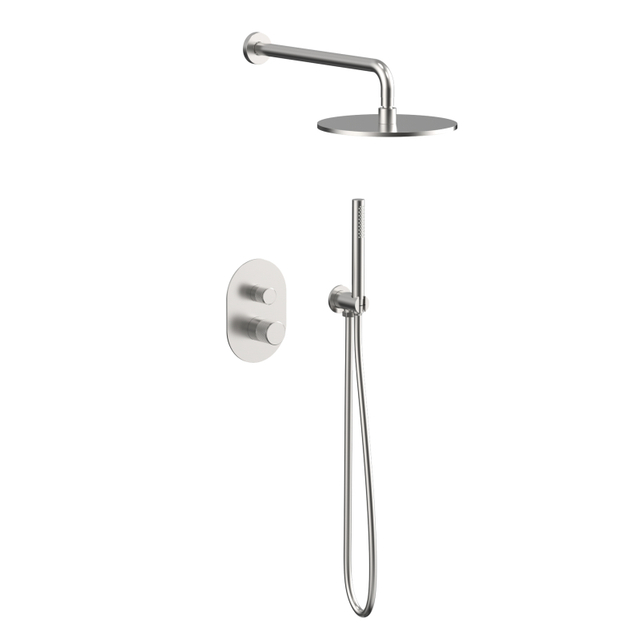
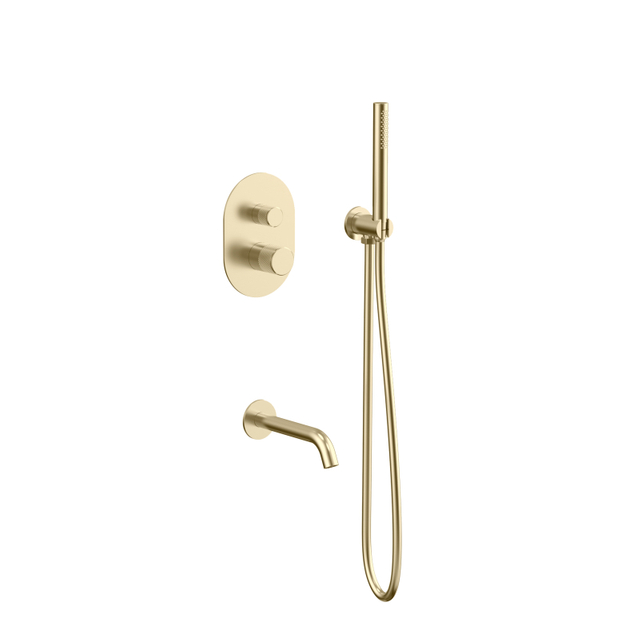
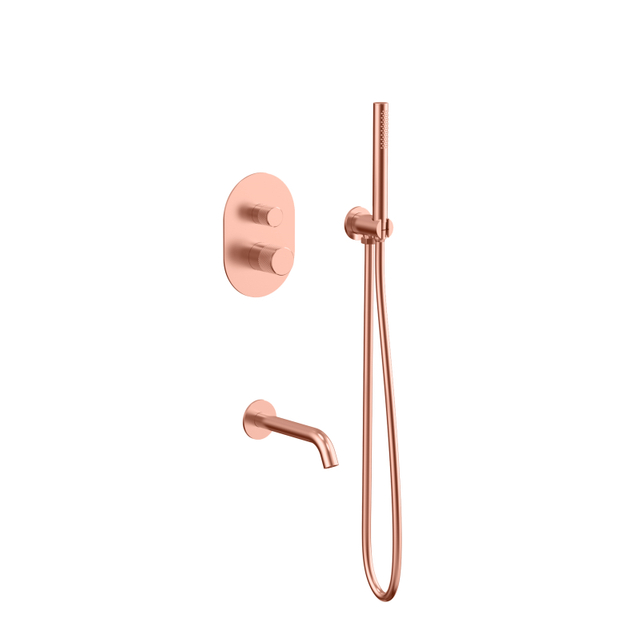
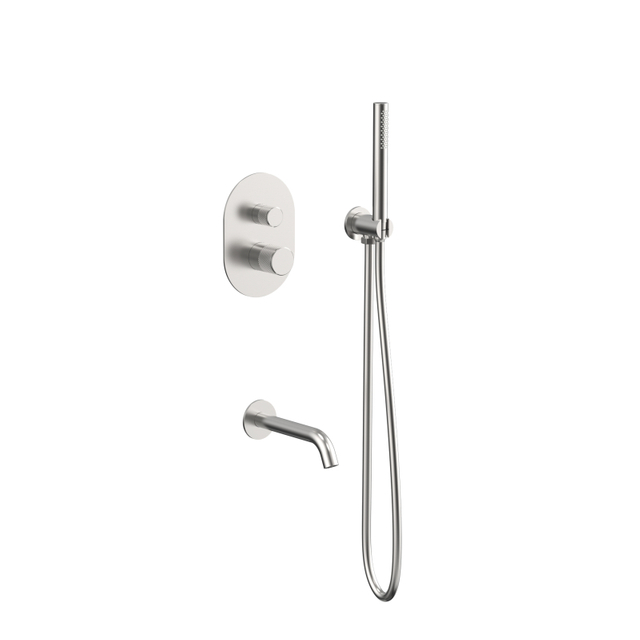
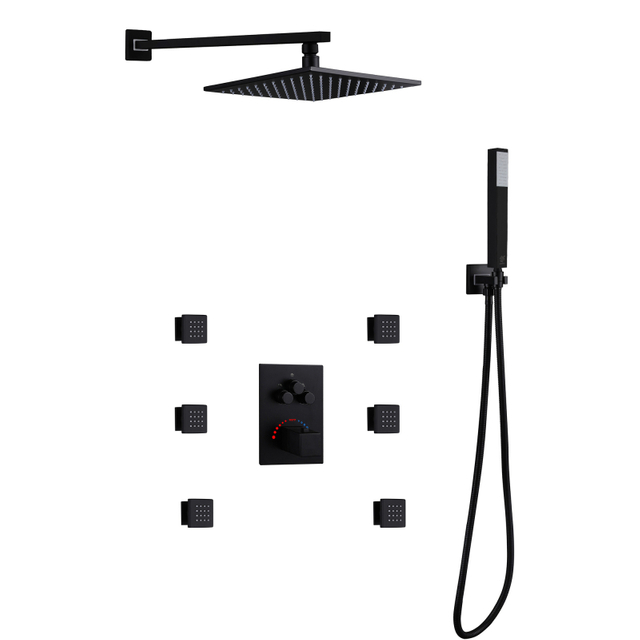
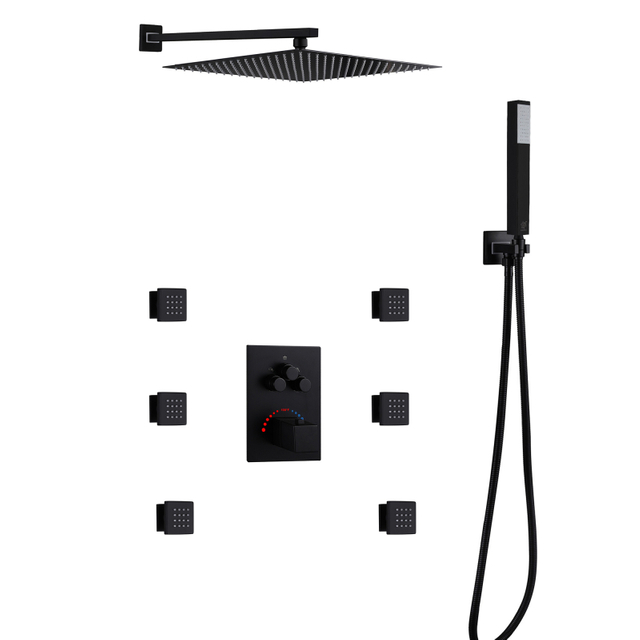
Their thermostatic shower range reflects this commitment to precision. Each system is designed to integrate seamlessly—thermostatic valve, diverter, shower head, and volume control—so installers and homeowners get a cohesive solution rather than a collection of mismatched parts. Ycfaucet also offers OEM and ODM services, making it a practical partner for contractors, hotel developers, and retail brands looking to source high-quality shower systems at scale.
With more than 10,000 overseas clients served and new product lines launched every quarter, Ycfaucet has built a track record that speaks to consistent quality across a high volume of projects.
Choosing between a basic thermostatic setup and a full integrated system depends on a few practical factors. If your primary concern is temperature safety—say, for a family with young children—a thermostatic valve with anti-scald protection is the essential starting point. If water conservation is the priority, a certified low-flow shower head delivers the most direct impact. For a complete upgrade that covers comfort, safety, and efficiency together, a fully integrated thermostatic system from a certified manufacturer is the most logical choice.
Price point matters too. Premium stainless steel systems carry a higher upfront cost than standard brass or zinc alternatives, but the durability gap is significant. A well-made thermostatic shower system installed today should still be performing reliably a decade from now—making the cost-per-year comparison far more favorable than it might initially appear.
A great shower is one of those small daily experiences that compounds over time. The right thermostatic system removes the friction—no temperature guessing, no sudden shocks, no wasted water while you wait for things to stabilize. It simply works, every time.
For homeowners, renovators, and specifiers who want that level of reliability backed by certified materials and proven engineering, Ycfaucet's thermostatic shower range is worth a close look. Browse their full shower set catalog at ycfaucet.com or reach out directly to discuss product specifications and OEM possibilities.
A thermostatic valve automatically maintains a preset water temperature by adjusting the hot-to-cold ratio in real time, even when pressure changes elsewhere in the plumbing. A standard mixing valve requires manual adjustment and does not compensate for pressure fluctuations, which can result in temperature spikes or drops during use.
Not necessarily. Modern low-flow shower heads use aerating or pressurizing technology to maintain a strong, satisfying spray pattern while reducing water volume. Many users report no noticeable difference in experience when switching from a standard 2.5 GPM head to a quality 1.8 GPM model.
For North American markets, look for cUPC certification and NSF/ANSI 61 and 372 Lead Free compliance. For Australia and New Zealand, Watermark and WELS certification are the key standards. These ensure the product has been independently tested for safety, material quality, and flow performance.
Stainless steel—especially 316 grade—offers superior corrosion resistance, particularly in coastal or hard-water environments. It is also lead-free by nature, which is a significant advantage in markets with strict drinking water safety standards. Brass remains common and functional, but requires lead-free certification to meet modern regulatory requirements.
Yes. Most thermostatic valves are designed for retrofit installation and can replace existing mixing valves without requiring significant structural changes. A licensed plumber can typically complete the installation in a few hours, depending on wall construction and existing pipe configuration.