- All
- Product Name
- Product Keyword
- Product Model
- Product Summary
- Product Description
- Multi Field Search

Kaiping Yingchuan Sanitary Ware Technology Co., Ltd
304/316 stainless steel sanitary ware manufacturer
 English

Views: 0 Author: Site Editor Publish Time: 2026-09-17 Origin: Site


A lot of homeowners and renovators type "is Watermark a good brand" into Google, expecting to find reviews of a manufacturer. That search actually leads somewhere more useful. WaterMark isn't a company selling taps — it's a certification scheme used across Australia and New Zealand to confirm that plumbing products meet strict safety and performance standards. Once you understand what that label really means, you'll ask a smarter question: which manufacturers back up their certification with genuine engineering and material quality?
This distinction matters because a certification mark only tells you a product passed a set of tests. It doesn't tell you who made it, how consistent their manufacturing process is, or whether they stand behind their work with real factory capability. That's where the choice of supplier becomes far more important than any single stamp on a box.
When people ask if Watermark is a "good brand," they're usually referring to the WaterMark Conformity Assessment Scheme, administered under Australian Building Codes Board regulations. It applies to plumbing and drainage products, including taps, mixers, and shower fittings, sold into the Australian market. Products carrying this certification have been independently tested for water pressure tolerance, leak resistance, material safety, and long-term durability.
So rather than shopping for "the Watermark brand," the real task is finding manufacturers who produce genuinely certified watermark faucets and can prove it with documentation, not just a printed logo.
A recognizable name on a faucet doesn't guarantee it meets Australian plumbing code. Plenty of imported fittings enter the market without proper testing, and buyers only discover the problem after a leak, a corroded valve, or a failed inspection. Certification acts as a verifiable third-party check, which is far more reliable than marketing claims.
This is especially relevant for renovators and builders who need approval to pass council inspection. A certified fitting removes the guesswork because the compliance work has already been done and documented.
The table below breaks down what WaterMark certification typically verifies, so you know exactly what you're paying for when a product carries the mark.
Testing Category | What It Confirms |
|---|---|
Material Composition | Confirms the metal used (such as 304 or 316 stainless steel) meets lead-free and corrosion-resistance requirements |
Pressure & Leak Testing | Verifies the fitting withstands standard water pressure without leaking or failing over time |
Durability Cycles | Simulates years of daily use to confirm the valve and finish hold up |
Water Efficiency | Checks flow rate against WELS (Water Efficiency Labelling Scheme) benchmarks where applicable |
Manufacturing Consistency | Requires ongoing factory audits, not just a one-time product test |
Notice that the last row is critical. Certification isn't a single event — manufacturers must maintain consistent production standards to keep their approval valid. That's a strong signal for choosing suppliers who take compliance seriously as an ongoing practice rather than a marketing checkbox.
Since WaterMark itself is a scheme rather than a company, the real decision comes down to picking a manufacturer with a track record of certified production. Kaiping Yingchuan Sanitary Ware Technology Co., Ltd, known under its QIOIO Faucet line, has built its business around exactly this kind of compliance. Founded in 2016 in Guangdong Province — often called the plumbing sanitary ware base of China — the company holds eight international certifications, including WaterMark, WELS, cUPC, and NSF/ANSI standards.
Rather than outsourcing production, the company operates its own factory with in-house research and development, mold manufacturing, and quality control. That vertical setup makes it easier to maintain the manufacturing consistency that certification bodies require, instead of relying on third-party assembly where quality can vary batch to batch. If you're comparing suppliers for a watermark mixer tap, asking whether the factory controls its own production line is a useful filter.
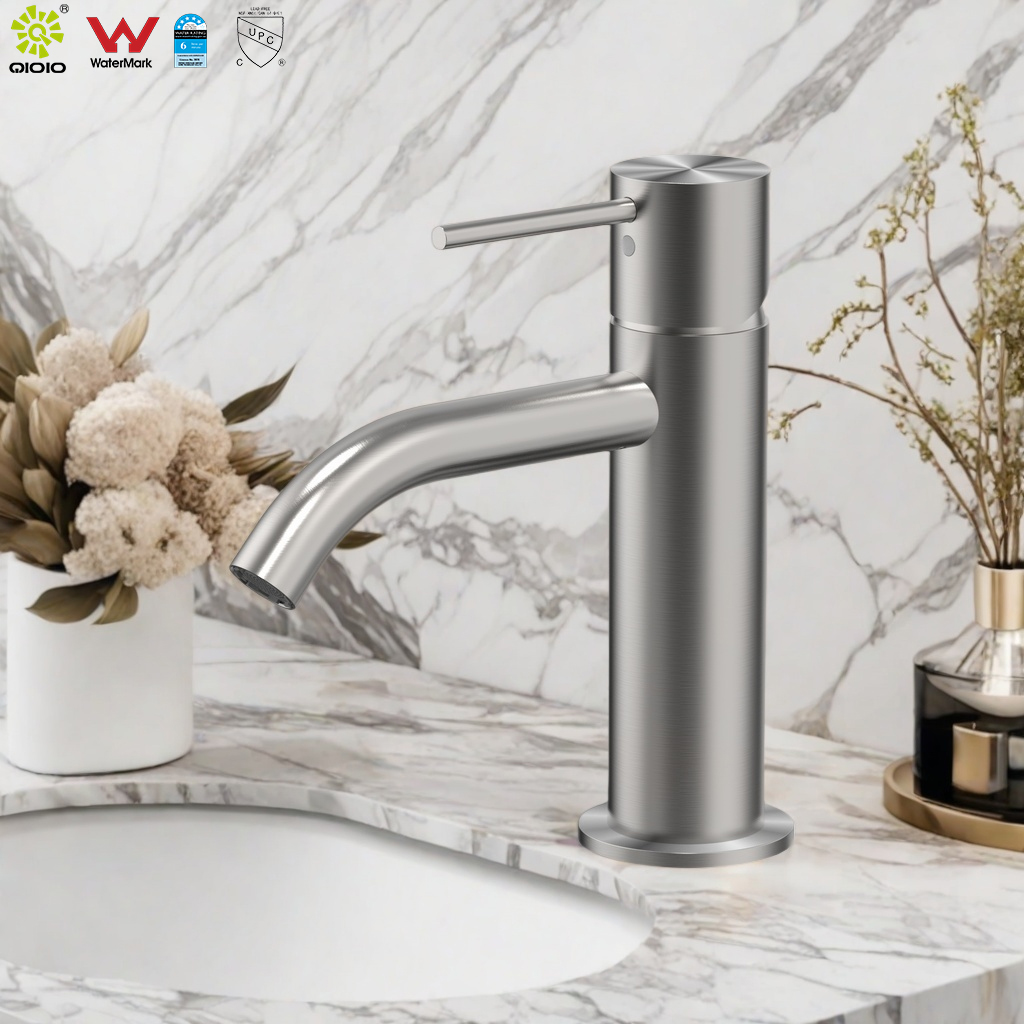
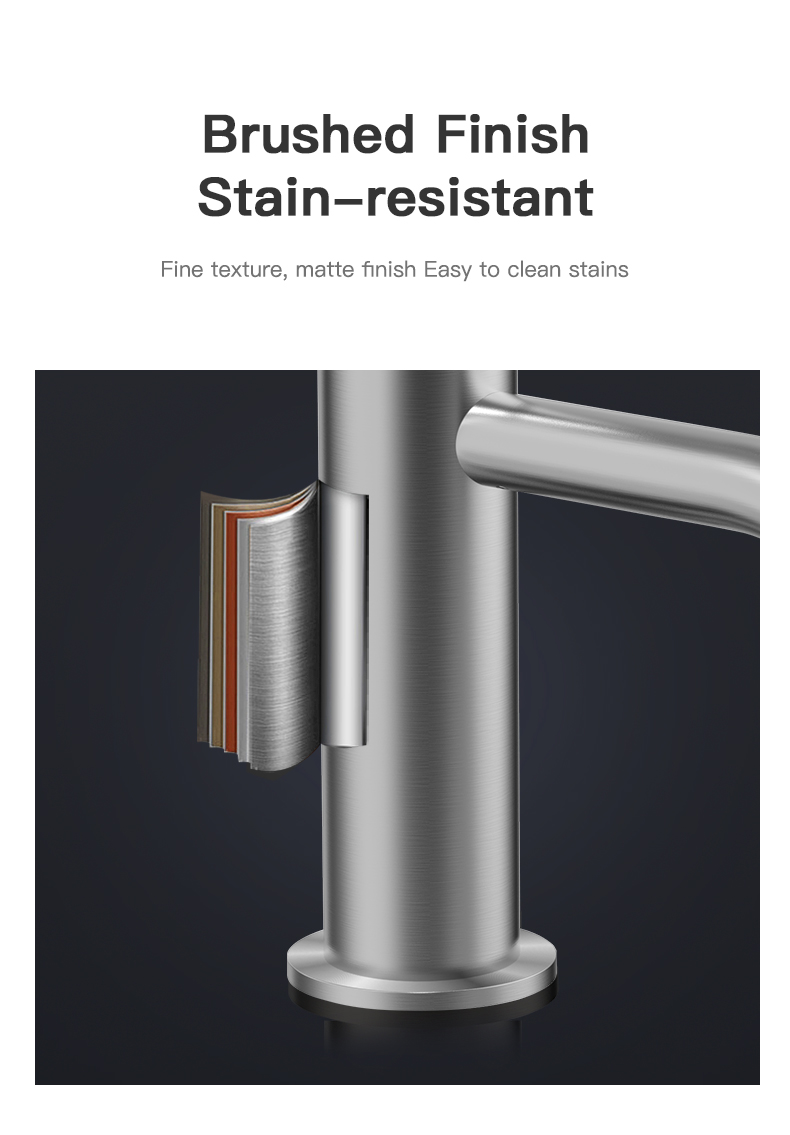
Certification covers safety and compliance, but material choice determines how long a fitting actually lasts in daily use. Faucets made from 304 stainless steel offer solid corrosion resistance for standard residential use, while 316 stainless steel goes further, holding up in harsher conditions like coastal homes, outdoor showers, or high-humidity bathrooms.
QIOIO Faucet's 316 Italian Series draws on this higher-grade material, combining lead-free composition with multiple precision-forming and surface-hardening processes. The result is a fitting that resists oxidation and maintains stability even in demanding water environments — a meaningful upgrade over standard-grade alternatives when you want a 316 stainless steel faucet built to outlast a typical renovation cycle.


The strongest argument for any certified fitting is the combination of verified compliance and solid manufacturing behind it. A stamp alone won't stop a poorly made valve from failing within a year. Pairing genuine certification with a manufacturer that controls its own factory, invests in R&D, and produces new designs every quarter gives buyers a far more dependable outcome. That combination is what separates a compliant product from a truly reliable one, whether you're outfitting a single bathroom or sourcing fixtures for a hotel project.
Is Watermark a company or a certification?
WaterMark is a certification scheme, not a manufacturer. It's used in Australia and New Zealand to confirm plumbing products meet safety and performance standards, so there's no single "Watermark brand" to review.
Do all faucets sold in Australia need WaterMark certification?
Most plumbing products connected to a water supply, including taps, mixers, and shower fittings, require certification to meet Australian Building Codes Board regulations and pass council inspections.
What's the difference between 304 and 316 stainless steel faucets?
304 stainless steel handles typical residential use well, while 316 stainless steel offers stronger corrosion resistance, making it better suited to coastal areas, outdoor installations, or harsh water conditions.
How can I verify a manufacturer's certification claims?
Ask for certification documentation directly and check whether the manufacturer maintains its own factory and quality control process, since certification bodies require ongoing audits rather than one-time testing.
The next time someone asks whether Watermark is a good brand, the real answer is that it isn't a brand at all — it's a benchmark. The better question is which manufacturers meet that benchmark consistently, back it with real factory capability, and use materials built to last. Looking past the logo and into the manufacturing process behind it is the surest way to end up with fittings that perform for years, not just pass a single inspection.